Sheet masks
Evaluate the serum, sheet material and wearing experience together.
Discuss a sheet mask
Develop your next mask with us. Start with the experience your brand wants to create, then bring format, material and formulation into one development brief.
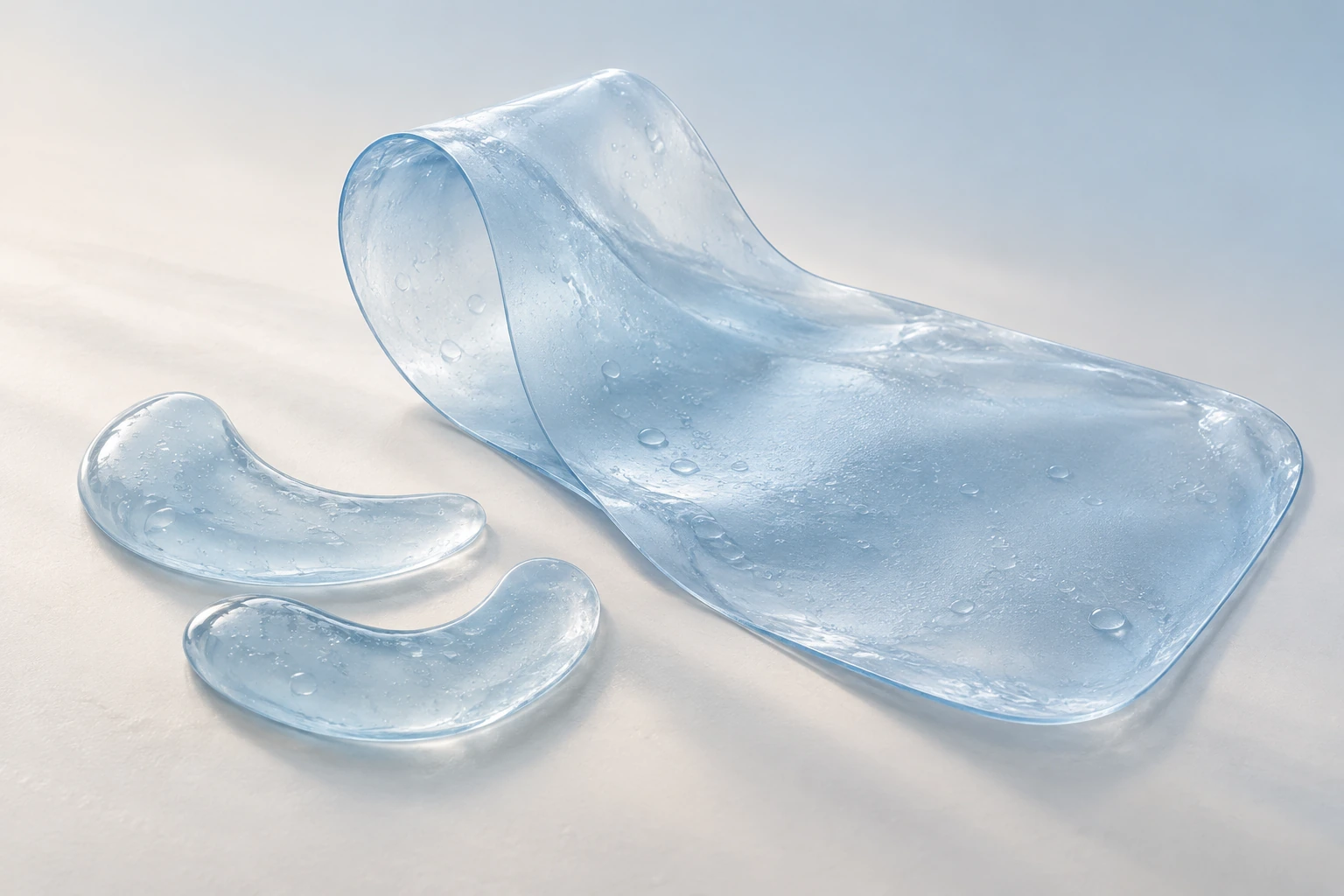
Begin with the application area, desired experience and packaging. These are development directions; sample specifications and production conditions are confirmed for each project.
Evaluate the serum, sheet material and wearing experience together.
Discuss a sheet maskExplore the skin-contact experience through material, thickness and forming conditions.
Discuss hydrogel developmentConsider size, shape and handling for a defined application area and use scenario.
Discuss a skincare patchSelect a development focus to see what it brings to the product discussion.
Define the product objectives, audience and desired texture before discussing ingredient combinations, serum quantity and the after-feel.
Evaluate material, thickness, shape and formula compatibility together. Use samples to review handling, fit and the wearing experience.
Use sample results to discuss forming, filling or sealing requirements and define size, appearance and specification checks. Production arrangements depend on equipment and process validation.
Include opening, removal, unfolding, fit and after-feel in sample feedback. Give the brand and development team a shared set of practical criteria.
Visgeneer explores hydrogel applications for masks and targeted skincare patches through material and product requirements. Development discussions consider these conditions together.
Explore hydrogel materials researchWhat feel and profile should the product have?
How will it be removed, unfolded and applied?
How should changes during use and storage be evaluated?
How will materials and ingredient combinations be assessed?
How should size, appearance and specifications be defined?
What packaging, sealing and transport evaluations are needed?
Available specifications and introduction schedules are confirmed through material, equipment and process validation for each hydrogel project.
Proprietary ingredients such as Ollantein® offer a direction for further formulation and brand-story discussions. Suitability and validation needs are assessed against the ingredient documentation, formula conditions and target market.
Ingredient research and finished-product testing are reviewed separately so product statements match the applicable evidence.
Explore fermentation & ingredientsPlan testing and documentation around the formula, format and target market. Scope and execution are agreed within each project.
Quality, testing & PIFDiscuss stability, packaging compatibility and storage conditions.
Define sample observations and a test plan.
Compare samples for handling, fit and after-feel.
Use feedback to define the next adjustments.
Clarify the scope of ingredient data, product tests and documentation.
Identify quality and PIF documentation needs for the project.
Share the audience, format, market, price positioning and intended schedule.
Agree on the development priorities.Start with a reference product or concept and review formula, material and feel.
Use specific feedback to refine the direction.Review packaging, specifications, testing, documents and production feasibility.
Define the requirements for the next stage.Evaluate production and delivery against agreed specifications, validation results and quantities.
Confirm a practical introduction plan.Share the format, audience, sales market, desired experience, estimated quantity and launch schedule. A reference product is helpful: explain what you would keep or improve. You can identify undecided items in your inquiry.
Yes. Share the application area, size, shape and packaging concept to discuss material and process feasibility. Sample specifications, tooling needs and production conditions require project assessment.
They can be included in formulation discussions. Suitability depends on product positioning, the actual formula, ingredient documentation and target market. Finished-product statements should align with applicable validation data.
They depend on formula, materials, shape, packaging, testing and production arrangements. Share the brief and estimated quantity so the team can assess and confirm project-specific conditions.
Bring a concept, a reference product or a development brief. Let's begin a conversation.