Make the full-face experience part of your concept.
Explore directions such as daily hydration or pre-makeup care, with whole-face or two-piece designs, intended wear time, fit and individual packaging.
Discuss hydrogel development
Make the materialpart of your product’s identity.
Design formulation, shape and the application experience together. Discuss hydrogel face masks, eye patches and targeted skincare patches with Visgeneer.
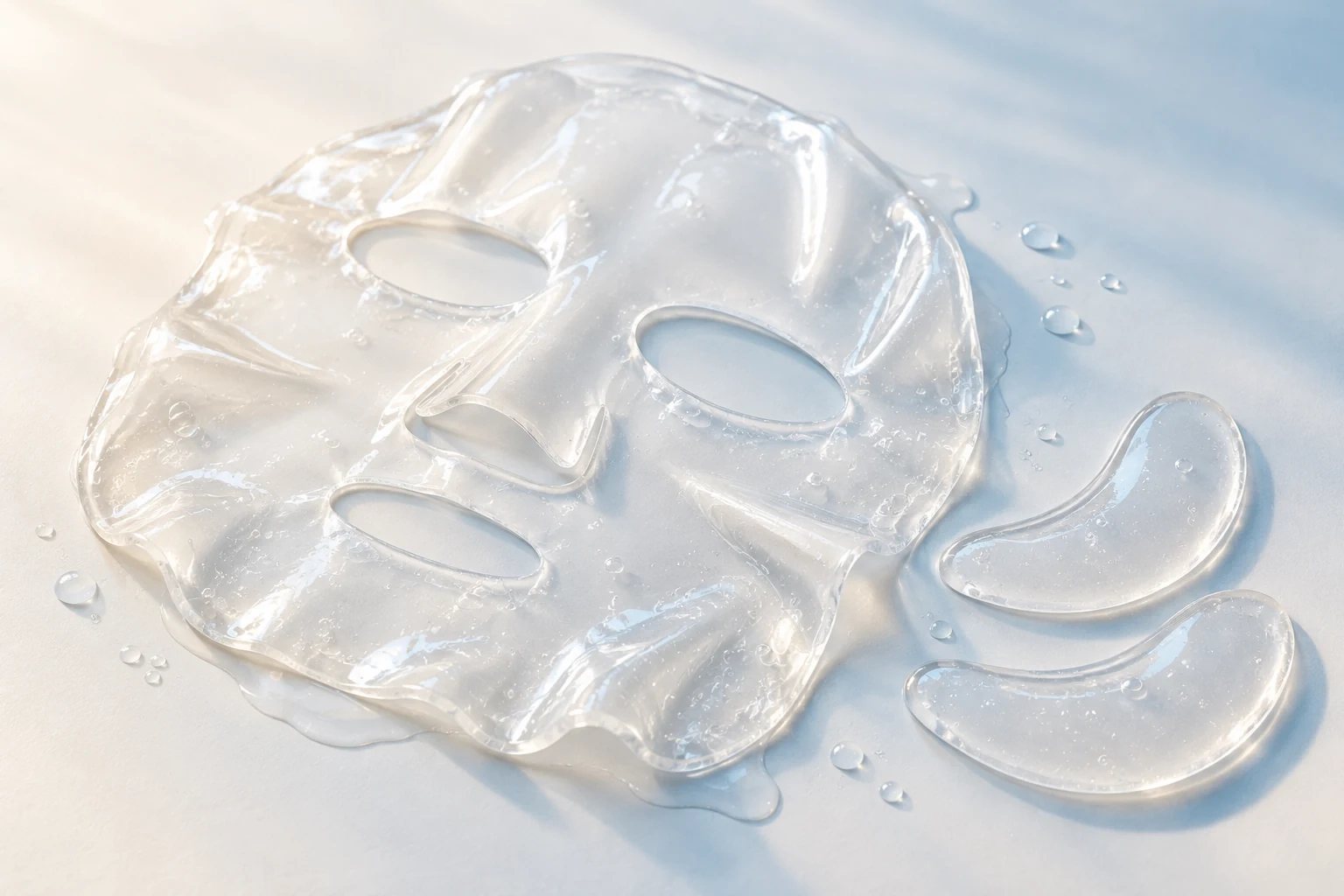
A hydrogel mask uses a water-containing polymer gel network as its substrate. Unlike a fabric mask that carries essence in a fibrous sheet, a hydrogel’s material and formulation jointly determine flexibility, fit and the application experience.
Current inquiries focus on development and sampling. Production timing, minimum order quantities and delivery conditions are assessed per project.
One brand concept can take different forms. These are development directions for discussion; actual shapes and specifications are confirmed through sampling.
Explore directions such as daily hydration or pre-makeup care, with whole-face or two-piece designs, intended wear time, fit and individual packaging.
Discuss hydrogel developmentAssess curve, size, thickness and slippage for the intended use. Eye-area products also require consideration of application location and use safety.
Discuss hydrogel developmentDiscuss neck or other localized skincare concepts. Evaluate shape, edges, stretch and package handling around the intended area and range of movement.
Discuss hydrogel developmentMaterial selection depends on positioning, use experience and development conditions. A material name alone cannot establish finished-product performance.
| Consideration | Hydrogel | Fabric sheet | Biocellulose |
|---|---|---|---|
| Primary structure | Water-containing polymer gel network | Fibrous carrier such as nonwoven fabric | Fine cellulose network |
| Development focus | Forming, thickness, flexibility and formulation | Substrate selection, cutting and essence loading | Substrate specification, fit and essence compatibility |
| Brand evaluation | Gel texture, shape and wear experience | Fabric feel, handling and product cost | Fit, unfolding and packaging design |
| Shared validation needs | Stability, microbiological quality, packaging compatibility and use experience | Validate the actual formulation and product | Validate the actual formulation and product |
Target market, application area, desired sensory feel and packaging.
Discuss shape, thickness, colour, feel and formula compatibility.
Review handling, fit, slippage, substrate integrity and after-use feel.
Scope stability, microbiology, packaging and performance testing, then confirm production-introduction conditions.
In skincare, both terms commonly describe masks with a water-containing gel substrate. Confirm the actual material, structure and specification when comparing suppliers.
Visgeneer currently welcomes development and sampling inquiries for hydrogel masks, eye patches and targeted patches. Production schedules, minimum orders, quotations and delivery conditions depend on the substrate, formula, packaging and project assessment.
Share your customization requirements so the team can assess material, shape, thickness, colour and formulation compatibility. Tooling needs, achievable appearance and specifications are confirmed through development and sampling.
This can be discussed. Integration requires assessment of gel structure, processing, colour, odour and stability. Finished-product claims need relevant tests and market-specific documentation.
That conclusion cannot be drawn from appearance alone. Changes may reflect water evaporation or material and formulation properties. Ingredient release, skin absorption and product performance require their own supporting tests.
Projects typically consider formulation and substrate stability, microbiological quality, packaging compatibility and use experience. Claims such as hydration require relevant finished-product testing; documentation depends on the target market.
From shape and sensory feel to formulation and packaging, explore a development direction for your brand.