Build fit through the details.
Discuss thickness, dimensions, openings and support layers for the intended user. Use samples to assess unfolding, facial coverage and sheet integrity during removal.
Discuss bio-cellulose development
A refined material.A considered skin experience.
Develop the sheet, essence and application together, shaping a mask around your brand’s expectations for texture, fit and skincare experience.
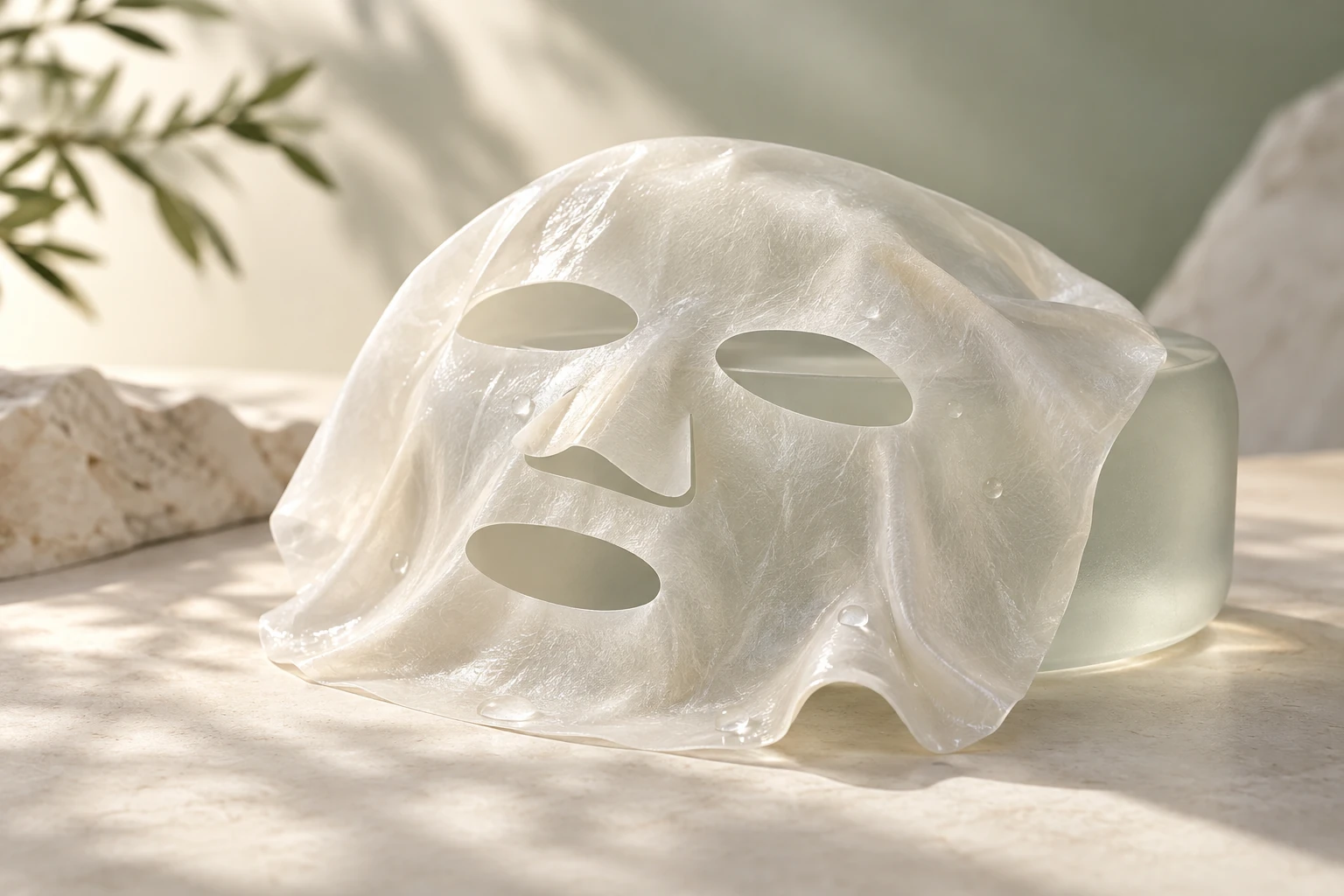
A bio-cellulose mask combines a cellulose sheet formed through microbial fermentation with a cosmetic essence. Also written as biocellulose, its fine fiber network can hold water and formulation. Finished-product performance depends on the combination of sheet, essence and application design.
Material and formulation researchStart with the material, then assess handling and application with actual samples.
A sheet cannot be considered in isolation from its formula. Removal, unfolding, application and lifting away each offer practical development criteria.
Discuss thickness, dimensions, openings and support layers for the intended user. Use samples to assess unfolding, facial coverage and sheet integrity during removal.
Discuss bio-cellulose developmentPlan the essence around the brand’s skincare direction, evaluating viscosity, liquid loading, dripping and after-feel. Ingredients such as Ollantein® can enter formulation discussions, followed by compatibility and finished-product evaluation.
Discuss bio-cellulose developmentEvaluate sachet materials, seals, folding and instructions together to support a consistent experience through transport, storage and use. Fill volume and packaging specifications are agreed for each project.
Discuss bio-cellulose developmentThese common development approaches help frame material discussions. A material name alone does not determine efficacy or quality.
| Consideration | Bio-cellulose mask | Gel-formed hydrogel mask | Conventional nonwoven mask |
|---|---|---|---|
| Structural starting point | A cellulose network formed by fermentation | A sheet formed from a gel formulation | A sheet carrier manufactured from fibers |
| Design focus | Sheet specifications, liquid loading and fit | Gel structure, forming and water release | Fabric specifications, essence loading and shape |
| Shared evaluation | Compatibility with essence, packaging and use | Compatibility with formulation, packaging and use | Compatibility with essence, packaging and use |
Hydrated bio-cellulose networks can also be described as hydrogels in materials science. This comparison distinguishes common product-development approaches; assess the actual structure and specifications of the selected material.
Explore Visgeneer hydrogel applicationsVisgeneer has experience developing and contract-manufacturing bio-cellulose masks. Collaboration can begin with material selection, essence formulation and packaging requirements.
Outline the market, channel, budget, skincare direction and desired application experience.
Confirm available material specifications and discuss formulation, compatibility and sample requirements.
Compare unfolding, fit, dripping, after-feel and packaging handling, then refine the proposal.
Plan stability, microbiological, preservative-efficacy and packaging assessments as appropriate; agree production specifications and required documents.
Published studies have examined the skin performance of bio-cellulose sheets with different formulations. They offer useful evaluation approaches for brand development; moisturizing, sensory and other claims should be supported by testing of the actual finished product.
Read an in vivo bio-cellulose mask studyBoth spellings commonly refer to bacterial-cellulose mask materials. Confirm the actual composition and specifications rather than relying on the product name alone.
Typical bio-cellulose masks use a cellulose network to carry essence, while gel-formed masks are designed around gel formulation and forming conditions. Hydrated bio-cellulose itself can have hydrogel properties, so compare actual structures and processes.
These can be considered during formulation development. Ingredient specifications, essence base, sheet, proposed concentration and packaging inform compatibility, appearance and stability assessment, followed by appropriate finished-product testing.
Yes. Material origin does not replace microbiological and preservative-efficacy evaluation of the complete product. Plan quality around the essence, sheet, process and packaging together.
They depend on material specifications, formulation, packaging procurement, testing and production scheduling. Share your estimated quantity and launch timing for a project-specific assessment.
Yes. Provide your target market, product positioning, reference products and budget range to begin discussing material, essence and sensory direction.
Bring your product direction to Visgeneer and discuss materials, formulation, sampling and manufacturing.